

As 2025 comes to a close, Cincinnati employers are already looking ahead at what next year’s workforce will bring. With daily conversations across the region’s hiring market — paired with fresh insights from the Cincinnati Chamber’s State of the Region 2025 report — trak group sees several early signals shaping 2026.
Here’s a first look at the hiring trends we expect to define the year ahead.
1. Cincinnati’s Population Is Growing, But The Working-Age Talent Pool Remains Tight
Cincinnati experienced its strongest population increase this decade in 2024, adding more than 20,000 new residents, according to the Chamber’s State of the Region report. Hamilton County alone saw 5,800 new residents, marking its biggest annual gain in years.
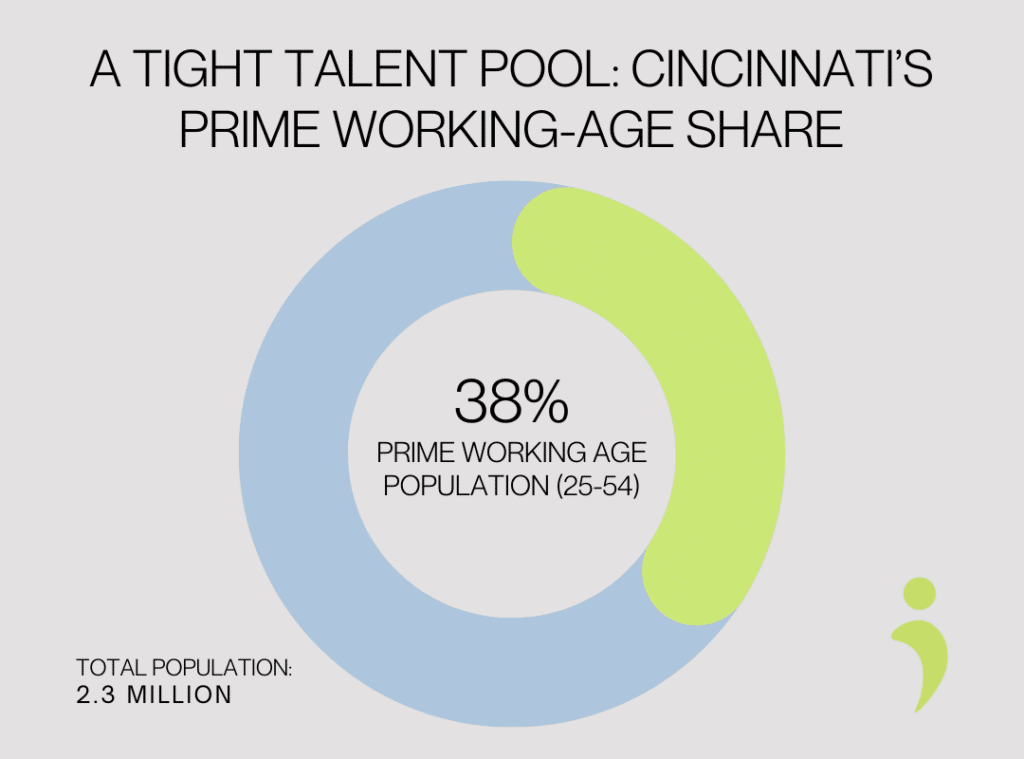
Despite this growth, only 38% of the region’s population falls within the prime working-age range (25–54)—one of the lowest shares among peer metros, based on the same report’s findings.
What This Means for Employers in 2026:
Even with strong population growth, talent competition will remain high. Roles that keep organizations running — accounting, administrative support, healthcare support, customer service, logistics, and skilled trades — will continue to be in demand.
Employers who communicate clearly, move efficiently through the hiring process, and set realistic expectations will have a noticeable advantage.
2. Cincinnati’s Major Industries Are Driving Stable, Long-Term Hiring Needs
Several of the region’s anchor industries continue to expand, creating steady hiring momentum heading into 2026.
- Transportation & Warehousing: This sector has added more than 26,000 jobs over the past decade, according to the Chamber’s report.
- Healthcare & Social Assistance: The region’s largest industry employs more than 165,000 people, with continued growth expected as healthcare systems and the population’s needs expand.
Higher education continues to climb as well. The University of Cincinnati reached nearly 54,000 students in Fall 2025, supporting additional staff, research roles, and campus operations.
What This Means for 2026:
Demand will remain strong for:
- HR, operations, and administrative roles
- Accounting & finance professionals
- Case managers, medical office staff, and clinical support positions
- Logistics, maintenance, and quality-focused roles
These aren’t short-lived trends — they reflect the ongoing stability and growth of Cincinnati’s core industries.
3. Rising Cost Pressures Will Shape What Candidates Prioritize
Housing affordability remains a significant factor influencing the job market. According to the State of the Region report:
- Rents rose 4.5% year over year
- Severe housing cost burden increased to 24.8%, one of the highest rates among peer regions
- Median income climbed to $81,489, now close to the national median
How This Impacts Hiring:
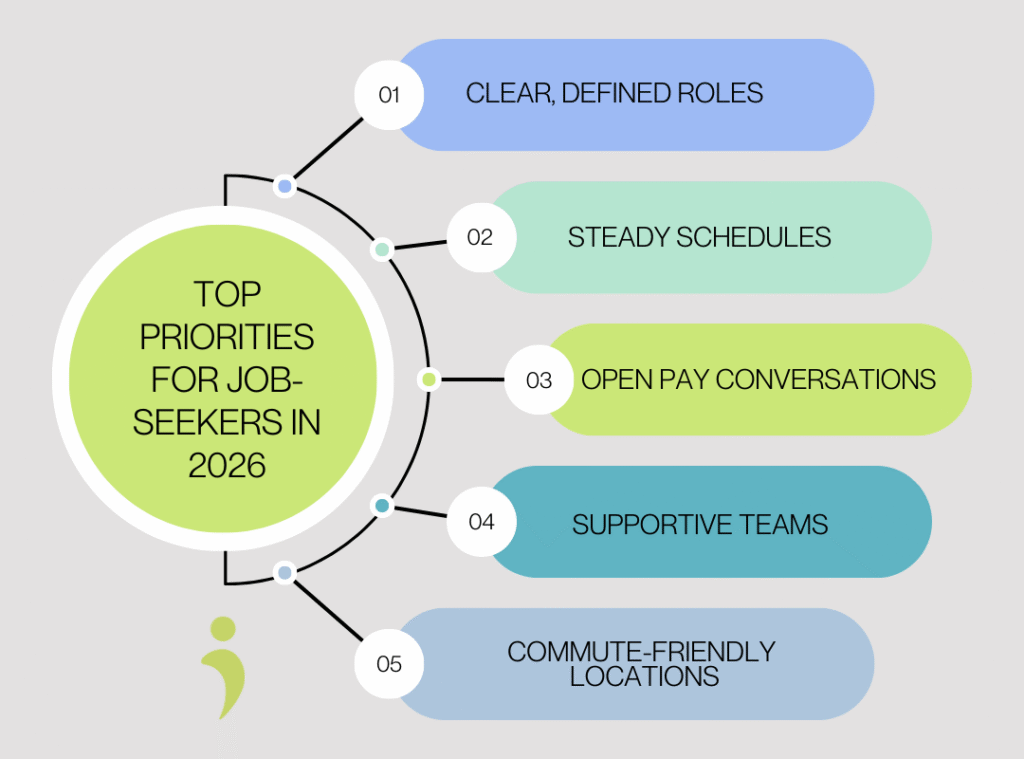
Candidates are increasingly focused on roles that offer:
- clear expectations
- predictable schedules
- transparent compensation
- supportive work environments
- manageable commutes or reliable transportation access
Employers who lead with clarity — not just benefits — will stand out.
Looking Ahead to 2026
Cincinnati is approaching 2026 with strong momentum. The region is growing, key industries are expanding, and employers across Greater Cincinnati are planning for long-term workforce needs. At the same time, tight working-age talent supply and rising cost pressures mean organizations will need to be intentional, transparent, and candidate-centered to stay competitive.
For job seekers, the year ahead brings stable opportunities — particularly in healthcare, logistics, finance, operations, and professional services.
At trak group, we’re proud to support the companies shaping Cincinnati’s future and the job seekers powering its growth. Whether you’re planning your 2026 hiring strategy or exploring your next career step, our team is here to help you navigate the year ahead with confidence.
Meet our business development and recruiting team— and connect with us today.


Our team combines deep regional expertise with a personal, people-first approach to hiring. If you’re ready to strengthen your workforce or learn more about the local talent market, we’d love to start a conversation.
Source:
Select data points referenced from the Cincinnati Chamber’s State of the Region 2025 report.